What happens to insulin, glucose, muscle, and metabolism during perimenopause and menopause?
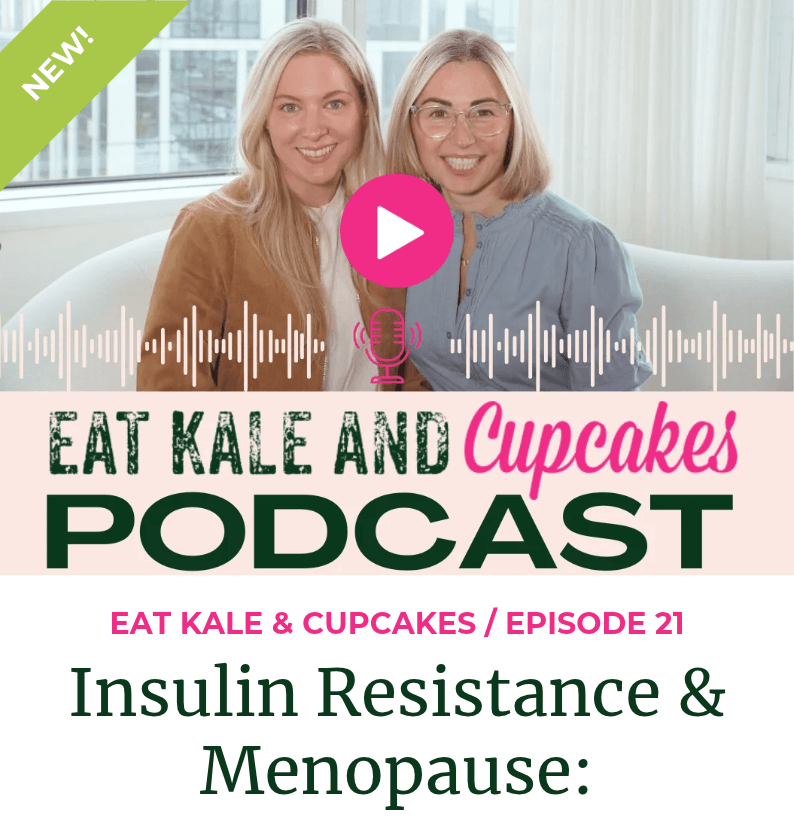
In Episode 21 of the Eat Kale and Cupcakes Podcast, Laura Cipullo and Shannon Herbert, take a whole-person look at insulin resistance and the menopause transition. We break down the physiology behind glucose and insulin metabolism, discuss why changes in insulin sensitivity can be part of the menopause picture, and explore what hormonal changes may mean for lean body mass, bone health, and metabolic health.
And because menopause is about so much more than a number on the scale, we also talk about how to support metabolic and endocrine health without falling into rigid food rules, obsessive tracking, or an all-or-nothing approach to nutrition and exercise.
In this episode, we discuss:
- Normal glucose and insulin metabolism: What happens after we eat, how glucose enters the bloodstream, and how insulin helps move glucose into cells.
- What is insulin resistance? We revisit our favorite taxi cab analogy to explain what happens when cells become less responsive to insulin.
- Insulin resistance and menopause: Why changes in estrogen and other hormones can influence glucose regulation and insulin sensitivity during perimenopause and menopause.
- Laura’s personal experience: Laura shares her own experience navigating insulin resistance alongside the menopause transition.
- Continuous glucose monitors (CGMs): What a CGM measures, how it may help someone observe changes in glucose patterns, and the limitations of using glucose data as a measure of overall metabolic health.
- What changes hormonally during menopause: We discuss declining estrogen and its relationship with changes in lean body mass, bone mineral density, and other aspects of health.
- The protective effects of estrogen: Why estrogen matters beyond reproductive health and why its effects on bone, muscle, and metabolic health are important to understand.
- Creatine and lean mass: We explore the potential role of creatine as one tool for supporting muscle health during midlife and menopause.
- Nutrition during menopause: How nutrition needs and priorities may shift during this life stage, including considerations around protein, carbohydrates, fats, and overall energy intake.
- Food sequencing: Could the order in which we eat carbohydrate, protein, fiber, and fat influence post-meal glucose responses?
- Resistance training: Why maintaining and building muscle is an important part of supporting metabolic, bone, and functional health.
- Fed vs. fasted workouts: Does exercising fasted provide a meaningful metabolic advantage, or might fueling your workout be more supportive for some people?
- Mindfulness and metabolic health: We discuss the role of mindfulness and stress regulation, including research connecting mindfulness practices with improvements in markers such as hemoglobin A1c.
- Avoiding rigidity and obsession: Why tracking glucose, macros, exercise, or food can become counterproductive—particularly for people with a history of eating disorders or disordered eating.
- Our favorite protein sources: Practical, flexible ways to incorporate protein without turning menopause nutrition into another set of rigid rules.
If you enjoyed this conversation, catch up on more Eat Kale and Cupcakes episodes and resources related to menopause, hormones, metabolism, and mindful nutrition.
Listen next:
Want to learn more?
Check out our menopause blogs.
Also- explore Be Your Own Nutritionist, our evidence-informed whole-person nutrition education program designed to help you understand nutrition science while developing practical skills and greater self-awareness around food, nourishment, and your body.
This episode is for educational purposes only and is not a substitute for individualized medical or nutrition care. Talk with your healthcare team about your personal health history, medications, hormone therapy, glucose regulation, exercise, and nutrition needs.